

I am reading a new book, The Japanese Mind: Understanding Contemporary Japanese Culture, by Osamu Ikeno, which goes through many traditional cultural concepts that has been very enlightening. As a source book in my research of Japan, I like it because it is written by Japanese communication major, college students, so fairly creditable. One of the chapter’s is on Dō (道), which I would like to expound on for a small series of posts.
Dō (道) is roughly translated as “way”, “the Way to be followed”, or “a code of behavior and doctrine”.
You see the word used in combination of many different words, some of the examples Ikeno uses are:
You see the word used in combination of many different words, some of the examples Ikeno uses are:
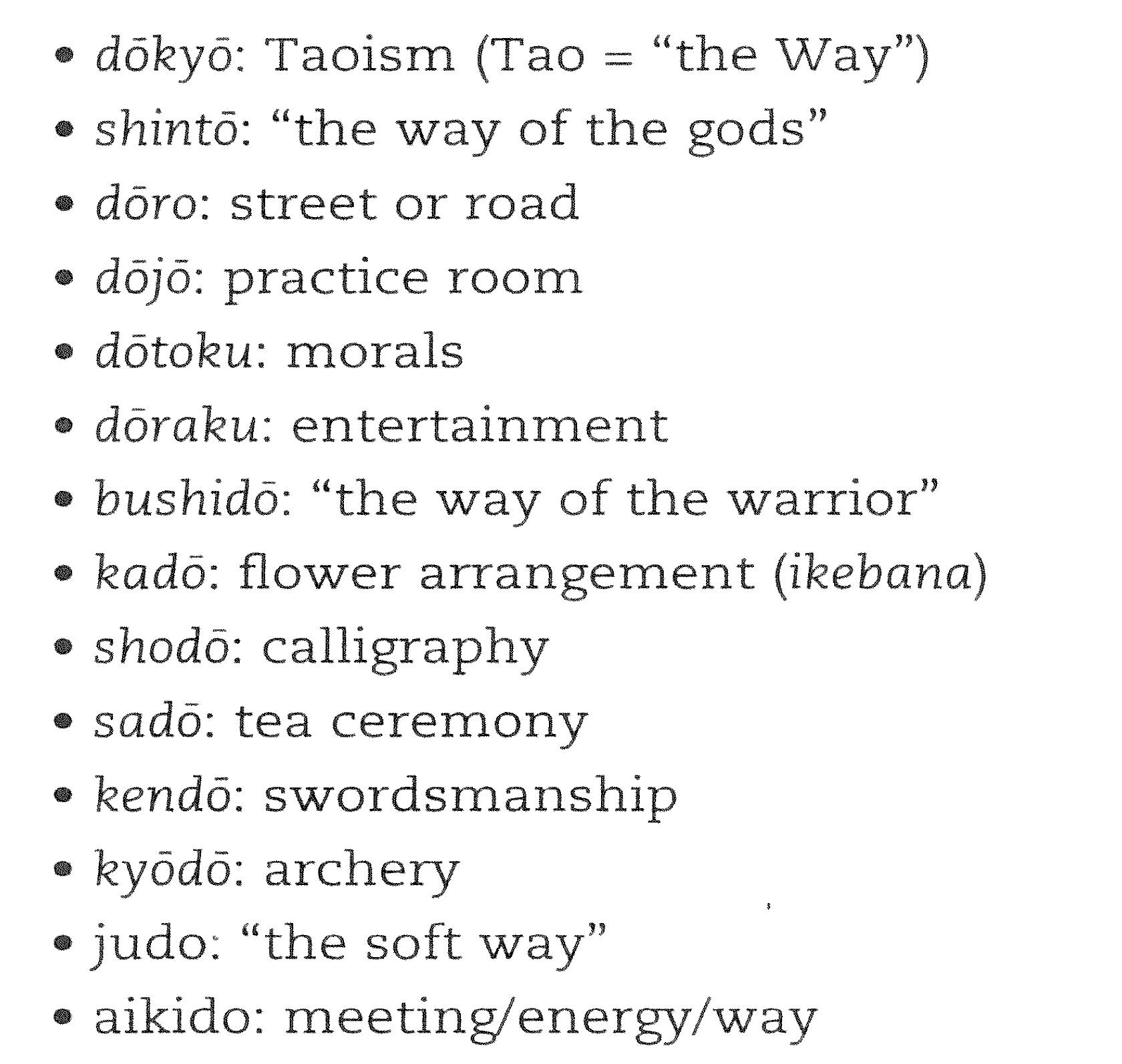
You can see it being used in very traditional Japanese arts, activities and past times, the tea ceremony, calligraphy, the way of the warrior, are all quintessentially Japanese. It’s a very entrenched word with specific meanings built into the culture. It can mean more than just martial arts as seen by the list, but the Wikipedia article on Dō , would imply an explicit understanding.
While it has it’s roots in Daoism, which is Chinese in origin, which has philosophy and religious interpretations (as the keen reader would already see where I am heading with this post). Tao or Dao is defined as “the natural order of the universe whose character one’s human intuition must discern in order to realize the potential for individual wisdom. This intuitive knowing of “life” cannot be grasped as a concept; it is known through actual living experience of one’s everyday being.” As you can see on the Wikipedia page, there are many interpretations of Tao, or dō (the japanese loanword for Tao) as many peoples from different backgrounds are defining the word through their experience.
Lets look at the Bible and a little church history for little bit.
John 14:6 says “Jesus said to him, “I am the way [emphsis added] , and the truth, and the life. No one comes to the Father except through me. “
You can see the early church using “the Way” as name for their sect/religion in the book of Acts. (See Acts 9:2, 19:9, 19:23, 24:14, 24:22) This was before Christians were called Christians, which translates “Like the Anointed/Follower of the Anointed” and is only used 3 times in the New Testament.
I love to use Blue Letter Bible to help understand the original meaning of some words, so looking up one of those above passages of Acts, you can click on the word and you can find out all sorts of useful scholarly type information, “of the way” is G3598 – Hodos – ὁδός – Strong’s Greek Lexicon (KJV), and you can see itw as used 102 times, although not always to describe Christians, some times for the other definitions, as seen below.
G3598 – hodos – Strong’s Greek Lexicon (KJV)
- properly
- a way
- a travelled way, road
- a travellers way, journey, travelling
- a way
- metaph.
- a course of conduct
- a way (i.e. manner) of thinking, feeling, deciding
As I you can see, they have very similar definitions and purposes, looping back to the Japanese definition, looking at a different website for another definition. See how similar they are!
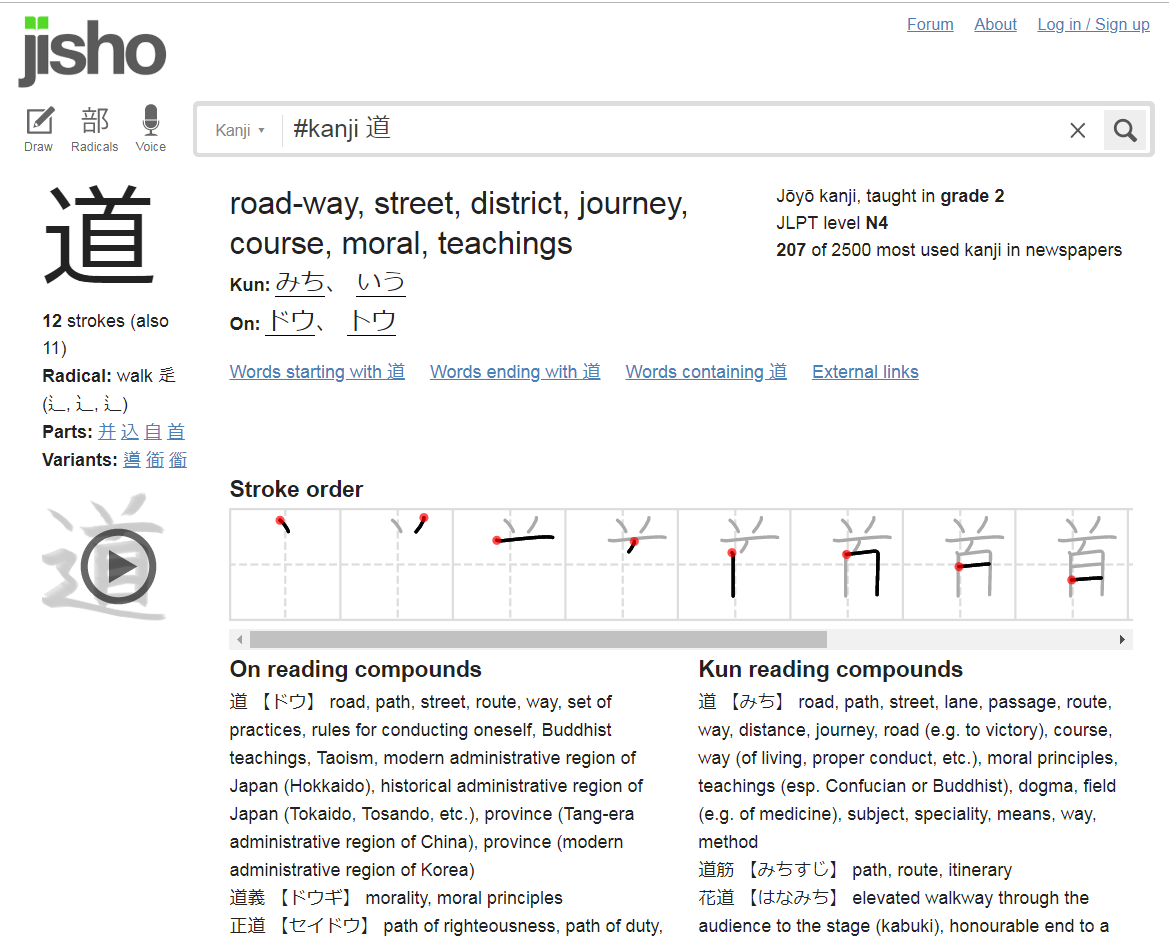
The reason this is so important, is because, in general, the Japanese do not view Christianity as a “Way” to carry out their lives, nor do they see it as a path of righteousness, or a path of duty (as Jisho defines above), but it is merely a religion; as you know brothers and sisters in Christ, that we are participating in more of a relationship than a religion.
I hope I have made a strong argument of the similarities of Dō (道), Hodos (ὁδός), and The Way of following Christ; which will lead me to my next articles on, what I am going to call, the Christian Kata.
If you don’t think I should be trying to marry these two words together, please leave a comment below why or why not, and lets talk about it. I am not yet in Japan trying to use these ideas, so if you can see severe, irrevocable problems with my line of thought or theology, point out where I will get into trouble to try to help me bring the Truth more clearly to the Japanese people.

 Furoshiki Family
2 thoughts on “A Brief Guide to Dō (道)”